Address
No.34 Weimin Road,Dongcheng District,Dongguan City,Guangdong Province,China
Whatsapp
+86 13829129089
Address
No.34 Weimin Road,Dongcheng District,Dongguan City,Guangdong Province,China
Whatsapp
+86 13829129089
Need a tubular part that no catalog supplies? At Changye we bend, laser-cut, weld and coat tubes and pipes as one integrated job — so a single drawing becomes a finished, ready-to-assemble component without bouncing between vendors.
Tube work looks simple until you actually run it. A bend that flattens, a weld that distorts a thin wall, a coating that peels at the seam — these are the failures we design out before the first part is made. This guide walks through how Changye handles CNC tube bending, cutting, welding and coating, the numbers we hold to, and the honest limits of each process, so you can brief us with confidence.
Experience note: Tubes behave differently from solid stock. The same tolerance that is trivial on a milled bracket can be a fight on a bent tube, because bending strains the material and shifts the neutral axis. That is why tube projects live or die on process order — bend, then cut, then weld, then coat — and on DFM feedback up front.
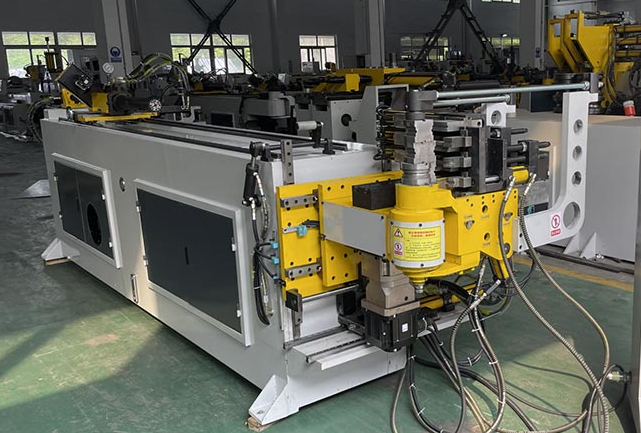
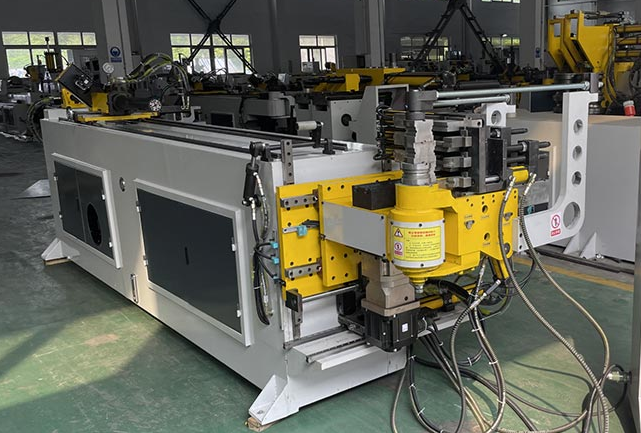
We bend on electric CNC tube benders with automatic feeding, which keeps repeatability tight across a production run and wastes less material than manual setup. For complex forms we use 3-axis tooling; where the wall is thin or the radius tight, we run a mandrel inside the tube during the bend. The mandrel supports the inner wall so the section stays round instead of collapsing or wrinkling.
Up to 4″ (≈102 mm) outside diameter.
Up to 3″ × 2.5″ profile.
Up to ¼” (≈6 mm).
Discuss your section — we also offer roll forming and cold drawing.
A few DFM rules save money and scrap: keep the bend radius at or above ~1.5× the tube OD where you can (tighter radii need mandrels and slow the cycle), avoid placing a hole or weld in the bend zone, and remember that bending work-hardens the material, which matters if the part is later welded. We will flag all of this on your drawing review — free, before you pay for tooling.
Our in-line CNC laser tube cutter makes precision cuts on large tubing, including after bending and forming. Cutting post-bend is the trick that prevents hole deformation and keeps the material from tearing at feature edges. It is also where tubes beat solids on lead time: you can bend a frame, then laser the copes, slots and end angles in one setup.
| Capability | Range |
|---|---|
| Round tube / pipe (OD) | Up to 16″ (≈406 mm) |
| Square tube | Up to 11.8″ (≈300 mm) |
| Wall thickness | Up to 0.5″ (≈12.7 mm) |
| Materials | Carbon steel, stainless steel, aluminum |
| Feature types | Tapered, square & hex holes, irregular slots, copes, compound-angle end cuts |
This is the workhorse for frames, enclosures and structural members where a straight tube needs dozens of precise intersections. Cutting after bending means the copes actually line up with the real (slightly sprung) geometry — not the theoretical one.
Joining is where tube assemblies either become robust or become a warranty claim. We match the process to the job:
Because welding follows cutting and bending in our flow, fixtures are cut to the actual part, so weld fit-up is consistent run to run. We also handle the unglamorous but critical bits — purge gas on stainless, distortion control on long thin members, and post-weld cleanup.
A tube assembly is only as durable as its finish. We apply coating and surface treatment so the part looks right and survives its environment:
One-system advantage: because bending, cutting, welding and coating all happen under one roof, the finish is applied to a known-clean, known-straight part — not a sub-assembly that already picked up handling damage from a second vendor. Fewer hand-offs, fewer variables, one accountable quality record.
Most shops do one of these steps well and subcontract the rest. Changye runs the full chain — forging, die casting, sheet metal, stamping, CNC machining, wire EDM, and now tube bending/cutting/welding/coating — as a single integrated manufacturer. For a tubular component that also needs a machined flange, a stamped bracket or a cast node, that means one drawing, one supplier, one quality system and one shipment.
One ISO 9001-aligned process [confirm cert no.] across every step — traceable from raw stock to finished tube.
We review your drawing and flag bend radii, weld access and coating conflicts before tooling.
Certificates and lot tracking on request for carbon steel, stainless and aluminum.
No inter-vendor shipping means the timeline is ours to control, not a chain of them.
The same tube skills show up across very different products: furniture and retail display structures, medical equipment frames, fitness machinery, telecom cabinets, food-service equipment, agriculture implements and general OEM enclosures. If it is a bent, cut, welded and coated metal tube, we can likely make it to spec.
Trust is cheaper than a re-run. A few boundaries we are straight about: