Address
No.34 Weimin Road,Dongcheng District,Dongguan City,Guangdong Province,China
Whatsapp
+86 13829129089

Address
No.34 Weimin Road,Dongcheng District,Dongguan City,Guangdong Province,China
Whatsapp
+86 13829129089
You’ve designed a mold cavity with a perfectly square internal corner. Your CNC mill sighs — because a round cutter can only ever leave a round corner. The smaller the tool, the closer you get, but you’ll never hit a true sharp corner. That’s the dirty secret of subtractive machining.
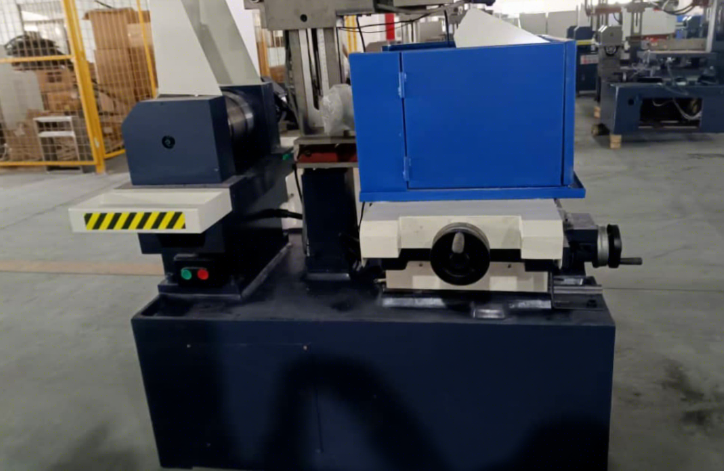
Wire EDM doesn’t have that problem. Because the “tool” is a thin wire that erodes rather than cuts, it can hold tolerances around ±0.001 mm and carve internal corners a mill can only dream about. Let’s look at why, and what it means for your next part.
A rounded corner isn’t just a cosmetic miss. In real parts it causes real headaches:
Wire EDM lets you put the corner exactly where your drawing says — no “as-milled” compromise.
| Feature | CNC Milling | Wire EDM |
|---|---|---|
| Contact method | Physical cutting | Electrical erosion (no touch) |
| Material limit | Most materials | Conductive only |
| Typical precision | High | Ultra-high (±0.001 mm) |
| Internal corners | Rounded (cutter radius) | Sharp (0° radius possible) |
| Tool wear | Yes | None (constant wire feed) |
| Surface finish | May need finishing | Often smooth & burr-free |
How tight a tolerance can wire EDM hold?
Typical production tolerance is around ±0.001 mm, and multi-pass skim cuts on precision jobs can reach roughly ±0.0001 inch (about 0.0025 mm).What’s the smallest internal corner radius wire EDM can cut?Is wire EDM more accurate than CNC milling?
How tight a tolerance can wire EDM hold?
Precision hardware & non-standard manufacturing specialists based in Dongcheng, Dongguan, China. Wire EDM, CNC machining, forging & die casting, and sheet metal — built to your drawing, not a catalog.
What’s the smallest internal corner radius wire EDM can cut?
Because the wire has no rotating cutter radius, internal corners can approach a true sharp corner — commonly down to about 0.05 mm, with some shops quoting internal corner radii as small as R.008 inch.
Is wire EDM more accurate than CNC milling?
For fine features and sharp internal corners, yes. Milling is limited by cutter radius and tool pressure; wire EDM removes material without contact, so it holds tighter tolerances on delicate and hard-to-reach geometry.
If your part lives or dies on its corner radius and its tenth-of-a-millimeter accuracy, wire EDM is the process. At Changye we hold ±0.005 mm as our standard wire EDM tolerance and push tighter on request — built to your drawing, not a catalog limit.