Address
No.34 Weimin Road,Dongcheng District,Dongguan City,Guangdong Province,China
Whatsapp
+86 13829129089
Address
No.34 Weimin Road,Dongcheng District,Dongguan City,Guangdong Province,China
Whatsapp
+86 13829129089
Hardened steel that would chew up an end mill. Titanium that work-hardens the instant a tool touches it. Tungsten carbide that’s harder than any cutter you own. If you’ve fought these materials, you know the frustration: the tougher the metal, the more it fights back.
Wire EDM doesn’t care how hard your material is. A carbide punch and a soft aluminum block cut at essentially the same rate, because the machine isn’t “cutting” at all — it’s eroding. Let’s see why hardness simply stops being the boss.
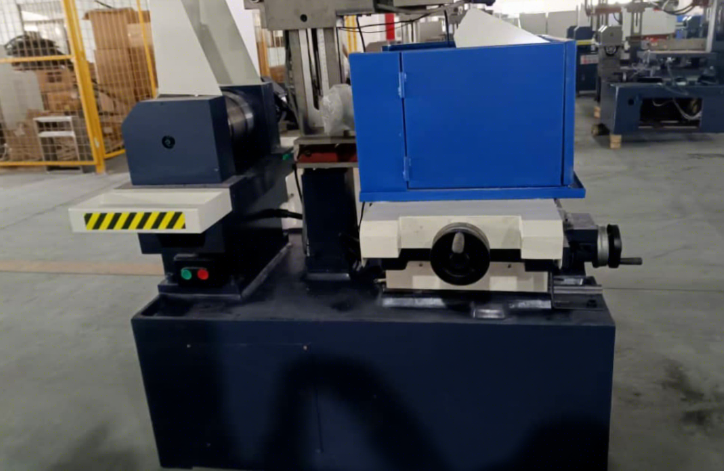
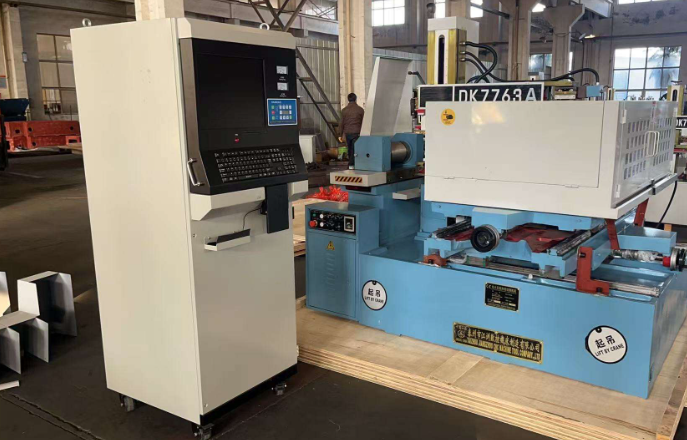
Think back to how wire EDM works: a thin wire sends a spark across a gap of deionized water, and each spark vaporizes a microscopic bit of metal. There’s no tool pressing into the surface, so there’s nothing to dull, deflect, or break.
If it conducts, we can erode it. Common ones we see:
This is the trick engineers love. With conventional machining you cut first, then heat-treat — and heat treatment warps your carefully machined shape. With wire EDM you can:
The result: a hard part with tolerances a mill could never hold post-heat-treat.
Honest caveat — wire EDM only works on electrically conductive materials. Most plastics, wood, glass, and standard ceramics can’t be cut this way. If your part is non-conductive, we’ll point you to the right process instead.
Why doesn’t material hardness matter in wire EDM?
Wire EDM removes material by spark erosion, not by a cutting tool pressing into the workpiece. The wire never touches the part, so hardness doesn’t dull or deflect the “tool” — carbide and soft aluminum cut at essentially the same rate.
Can wire EDM cut after heat treatment?
Yes, and that’s a major advantage. You can machine the part, harden it, then wire EDM the final features — avoiding the distortion that heat treatment causes to pre-machined geometry.
What materials can’t wire EDM cut?
Anything non-conductive: most plastics, wood, glass, and conventional ceramics. The workpiece must carry current for the spark to jump.
If your material is conductive and too hard, too brittle, or too exotic for a spinning cutter, wire EDM is almost certainly your best route. At Changye we cut carbide, Inconel, titanium, and hardened tool steels every day — to ±0.005 mm, built to your drawing.